
Wet Lamination of Cellulose Microfibrils
Towards recyclable cellulose-based packaging materials that comply with regulations
- Applying MFC to the surface of paper and cardboard
- Assessing the barrier performance of MFC at laboratory and pilot scale
- Developing alternatives to aluminium layers for high-barrier packaging
- Reducing the amount of plastic used in packaging
Generate Value...
The packaging sector is a rapidly growing market, and there is a need to develop new barrier materials that are renewable, recyclable and biodegradable. Based on conventional paper-making equipment, wet lamination of Microfibrils of Cellulose (MFC) is a unique process developed and patented by the CTP that enables paper or cardboard to be bonded without glue to a thin layer of MFC, thereby imparting barrier properties and increasing their rigidity, whilst preserving the paper’s biodegradability and recyclability.
This process enables the creation of packaging barrier against grease, oxygen and contaminants, is recyclable and complies with regulations. Laminated papers, combined with a coating stage, result in packaging that is predominantly cellulose-based and provides a barrier against water, water vapour, grease and oxygen. This concept reduces the amount of plastic used in packaging, lowers packaging-related CO2 emissions and offers an alternative to aluminium layers for high-barrier packaging.
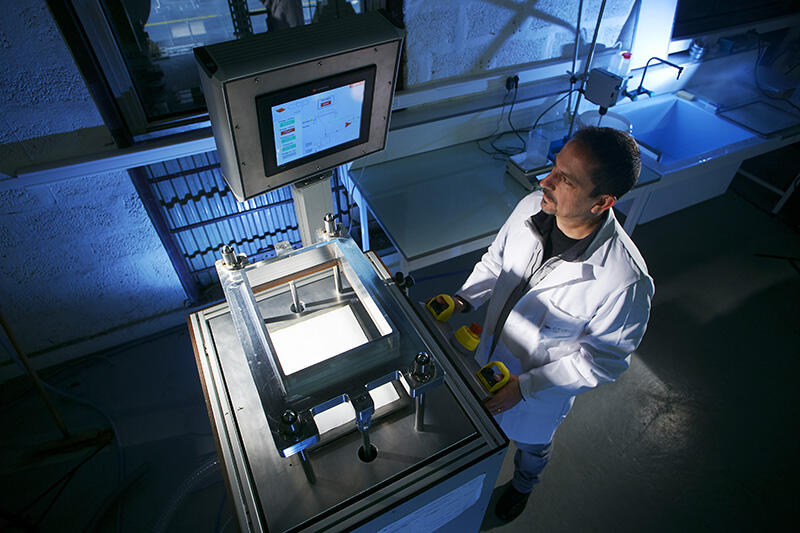
Wet lamination of MFCs at laboratory scale
Context and performance
Over the past 10 years, CTP has developed MFC wet lamination technology on various scales and now offers the application of a continuous MFC film onto the surface of paper and board.
The process consists of three stages: the production of a wet MFC film on a thin layer of fibres using a papermaking filtration process, the transfer of the wet mat onto a dry paper or board substrate, and finally the drying of the assembled material. Patented several years ago, the process has recently benefited from major technical advances, bringing it closer to industrial conditions.
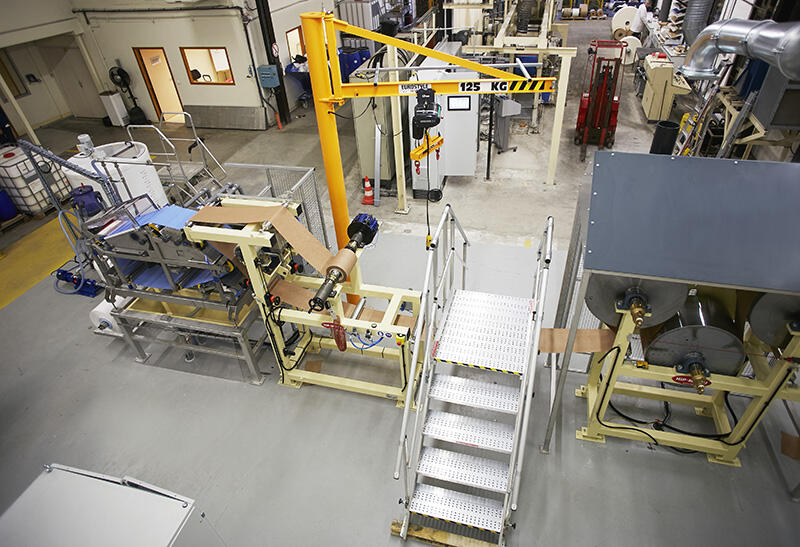
Wet lamination of MFC at pilot scale
Content of services
CTP experts assist manufacturers in selecting the appropriate paper and board substrates and MFC grades to be used, and in defining and carrying out a testing program.
The CTP proposes tests at different scales:
- A laboratory-scale process enabling the production of A4-sized samples to provide proof of concept and validate the approach and performance achieved.
- A pilot-scale process enabling the lamination of rolls and approximating industrial conditions.
The CTP also has paper pre-treatment processes (pre-coating, plasma activation) to enhance the adhesion of the MFC layer, or post-treatment processes (coating, chromogeny grafting) to develop specific barrier properties, particularly against water and water vapour.
The CTP can also provide an assessment of the performance of the laminated samples produced (mechanical properties, barrier properties, processability, recyclability, etc.).
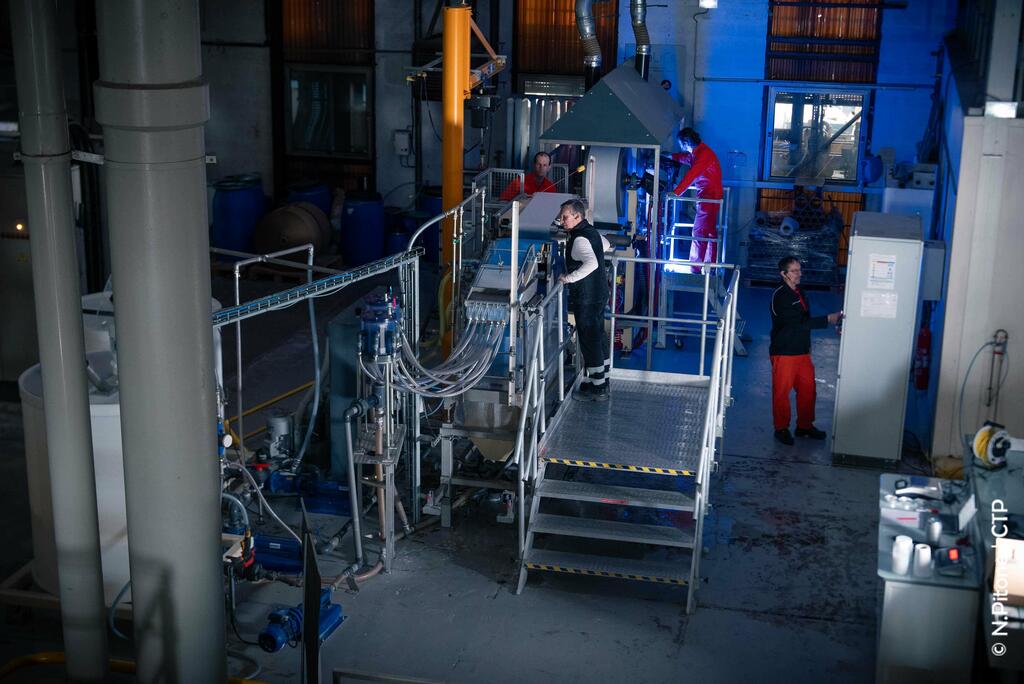 MFC wet lamination pilot machine
Deliverables
A report detailing the test conditions and any relevant comments on the test procedure is provided to the customer along with the materials produced, either in reels or in the desired format.